
A drilling machine is an essential metal‑cutting machine tool mainly used for hole processing. It performs drilling, reaming, countersinking, spot facing and tapping by the rotating and feeding movement of cutting tools. Different types of drilling machines have different structural configurations to match various processing scenarios.
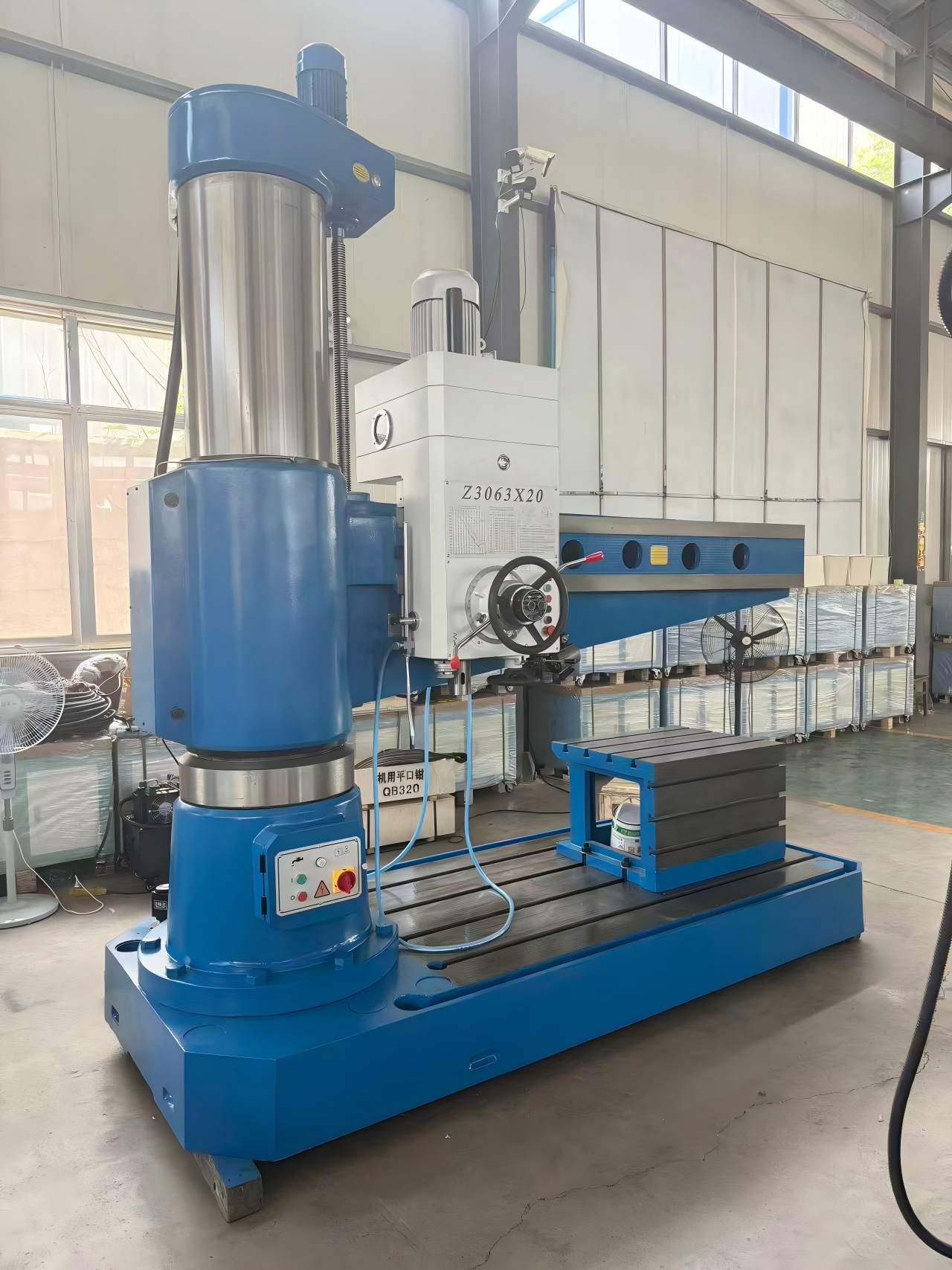
Radial drilling machines are the most widely‑used type in heavy‑duty workshops. The base is a heavy cast iron foundation fitted with T‑slots for clamping workpieces or worktables and bearing cutting loads. It supports the inner column. The column consists of inner column and outer column. The inner column is fixed on the base. The outer column sleeves the inner column and can rotate together with the radial arm with locking units. The radial arm is mounted on the outer column. It can lift up and down and rotate 360 degrees. The spindle box slides horizontally along its guideway, and its lifting motion is driven by a lifting motor. The spindle box sits on the guideway of the radial arm. Inside are change gears and feed mechanisms to offer variable spindle speeds and feed rates. It can slide side‑to‑side and is equipped with a locking device. The spindle unit has a Morse taper hole for holding drills, reamers and taps, delivering main rotary motion and axial feed motion. The locking mechanism can be hydraulic or mechanical. It locks the column, radial arm and spindle box during machining to prevent displacement and vibration. Hydraulic versions realize synchronous locking for all three parts. The worktable holds workpieces and can be removed on some models. Large‑size workpieces can be clamped directly on the T‑slots of the base. The electrical system includes main motor, lifting motor, push‑buttons and control circuits.
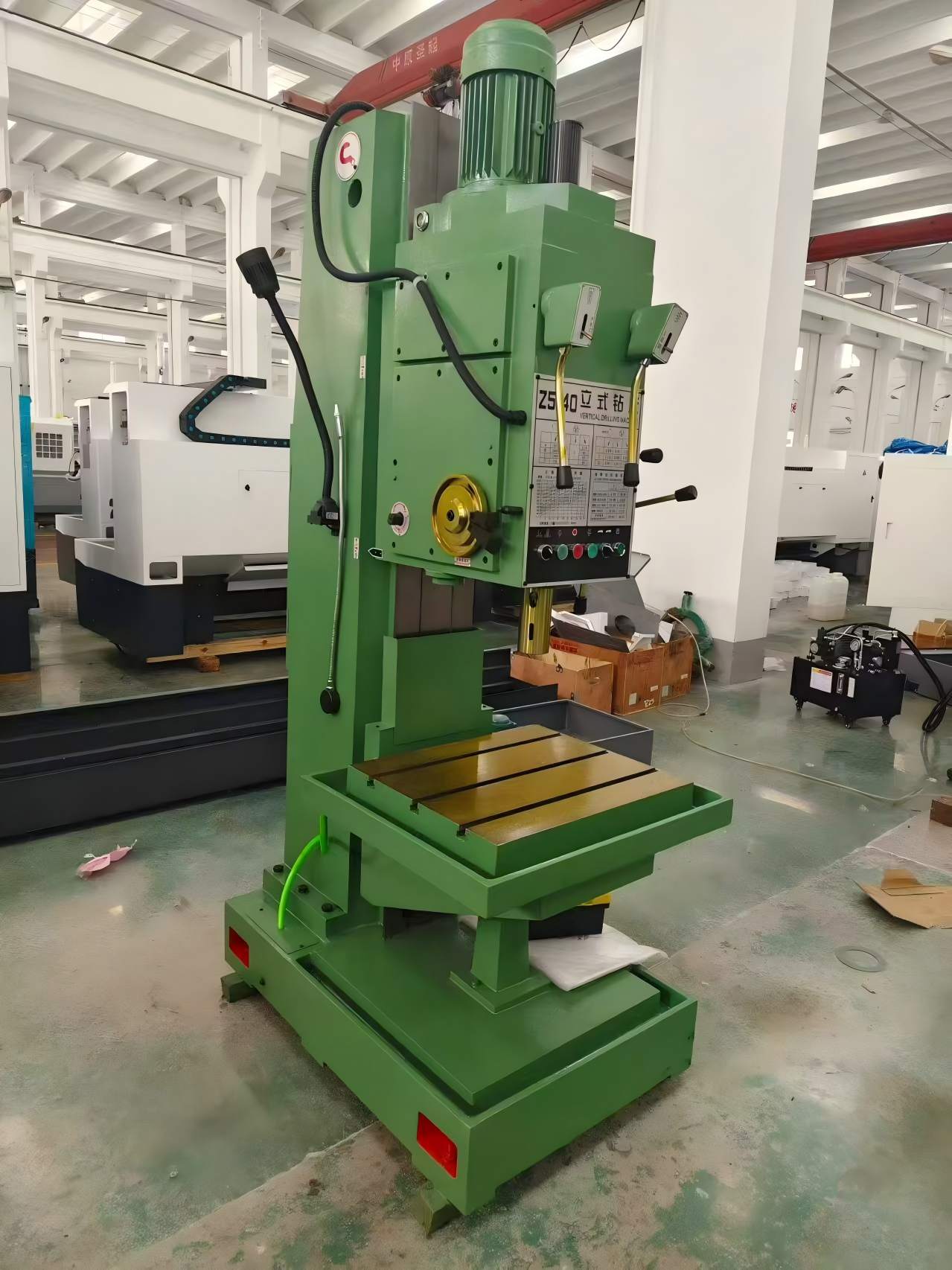
Vertical drilling machines consist of base, square column, spindle box, spindle, height‑adjustable worktable, feed control mechanism and electrical control system. The base supports the whole machine with T‑slots for workpiece clamping. The spindle box and worktable move vertically along the square column guideway. The spindle box provides speed change and feed functions. The spindle holds cutting tools and completes rotary and feed movement. Feed can be manual or automatic. For vertical drills, operators adjust hole positions by moving workpieces instead of shifting the machine itself, so large‑range position adjustment is unavailable.
Bench drill presses are compact small‑size drilling equipment. Its main parts are base, column, spindle box (headstock), spindle, worktable and feed handle. All feed operations are completed manually.
FAQ
Q1: What are the main types of drilling machines?
A1: Radial drill, vertical drill and bench drill for different workpiece sizes.
Q2: What is the feature of Z30 radial drill?
A2: The radial arm can rotate and lift, no need to move heavy workpieces.
Q3: Hydraulic locking VS mechanical locking?
A3: Hydraulic locking supports synchronous locking for better rigidity and stability.
Q4: What tools can be installed on the spindle?
A4: Drills, reamers, taps via Morse taper hole.
Q5: What processing can drilling machines do?
A5: Drilling, reaming, countersinking, spot facing and tapping.
Leave A Message
Scan to Wechat/Whatsapp :