
A bench drill press is a precision bench-mounted drilling machine designed for accurate, vertical hole drilling, tapping, reaming, and light boring on metal, wood, and plastic materials. Compared with handheld electric drills, a bench drill delivers stable spindle rotation, fixed vertical precision, and adjustable speed control, eliminating hand shaking and inconsistent hole sizes.
Widely used in small workshops, hardware processing, factory maintenance, schools, and home DIY projects, the bench drill press is regarded as the most essential foundational workshop equipment. It helps machinists and workshop owners achieve standardized, high-efficiency, and high-precision hole processing with low investment and small floor space.
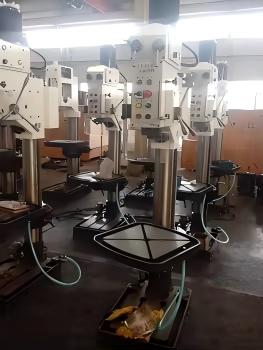
Many users choose professional bench drill presses over ordinary hand drills or cheap mini drills mainly because of its five irreplaceable core advantages. These features also serve as key buying factors for global B2B and B2C buyers:
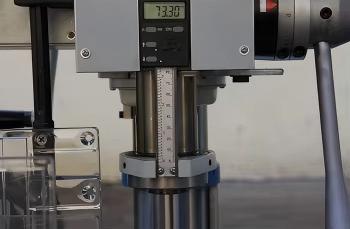
Professional bench drill presses adopt precision-calibrated vertical spindle structures and high-precision bearings. The spindle runs vertically without deviation, ensuring straight hole walls and consistent hole depth. It effectively avoids inclined holes, oversized apertures, and workpiece scrapping caused by manual shaking, perfectly meeting precision requirements for hardware parts, fixtures, and custom components.
Equipped with thickened cast iron base and solid column structure, premium bench drills feature high overall rigidity and strong shock resistance. The counterweight and fixed base design greatly reduce vibration during high-speed drilling. Even during long-term continuous operation, the machine remains stable, ensuring uniform cutting and smooth hole forming.
Standard industrial bench drill presses support multi-speed gear adjustment, covering low-speed heavy drilling and high-speed fine drilling scenarios. Low speed provides strong torque for hard materials such as steel and iron, while high speed adapts to soft materials including aluminum, copper, wood, and plastic. One machine can handle all conventional drilling materials, with strong universal processing performance.
Different from inefficient handheld drills, the mechanical feed structure of the bench drill press realizes stable automatic feeding. It reduces manual operation fatigue, greatly improves drilling efficiency, and is suitable for batch repetitive hole processing. For small-batch production and daily workshop processing, it can significantly shorten working hours and improve output.
Bench drill presses feature desktop integrated design, occupying minimal workshop space. They are easy to install, simple to operate, and low in failure rate. Whether for industrial commercial use, vocational school training, factory equipment maintenance, or advanced home DIY, they can adapt perfectly, with ultra-high cost performance and long service life.
The versatile bench drill press covers almost all conventional precision drilling scenarios, serving diverse user groups from factories and enterprises to individual users:
Q1: What materials can a bench drill press drill?
It supports most common processing materials, including steel, iron, aluminum, copper, metal alloy, wood, plastic, and acrylic. By adjusting different speeds, it can adapt to hard and soft materials for precise drilling and tapping.
Q2: What is the difference between a bench drill press and a hand drill?
Bench drill presses feature fixed vertical precision, stable operation, and adjustable speed, with uniform hole size and straight hole walls. Hand drills are prone to shaking and deviation, only suitable for rough drilling. For precision processing and batch production, bench drills are more reliable and efficient.
Q3: How to choose a suitable bench drill press?
Focus on three core parameters: spindle precision, motor power, and speed range. For industrial use, choose cast iron body and high-power models; for training and DIY, select compact and easy-to-operate small bench drills.
Q4: Can a bench drill press be used for tapping?
Yes. Most industrial bench drill presses support tapping and reaming functions. Match the corresponding tap and reduce the spindle speed during operation, and you can complete standard thread processing efficiently.
Leave A Message
Scan to Wechat/Whatsapp :