
A leading CNC machinery manufacturer offering factory-direct pricing and ISO-certified quality, backed by a global footprint in 60+ countries and a lifetime commitment to unlimited technical support.




A leading CNC machinery manufacturer offering factory-direct pricing and ISO-certified quality, backed by a global footprint in 60+ countries and a lifetime commitment to unlimited technical support.
I. Introduction
In workshops that machine gearbox housings, engine blocks, wind turbine bases, construction machinery valve bodies, and large molds, boring and milling machines are the primary equipment used for the precision machining of large-scale hole patterns, end faces, and grooves. Many people struggle to distinguish between lathes, milling machines, and boring-milling machines. While lathes rotate the workpiece and milling machines rotate the cutting tool, boring-milling machines combine both boring and milling functions, making them the “all-rounders” for the precision machining of heavy-duty components.
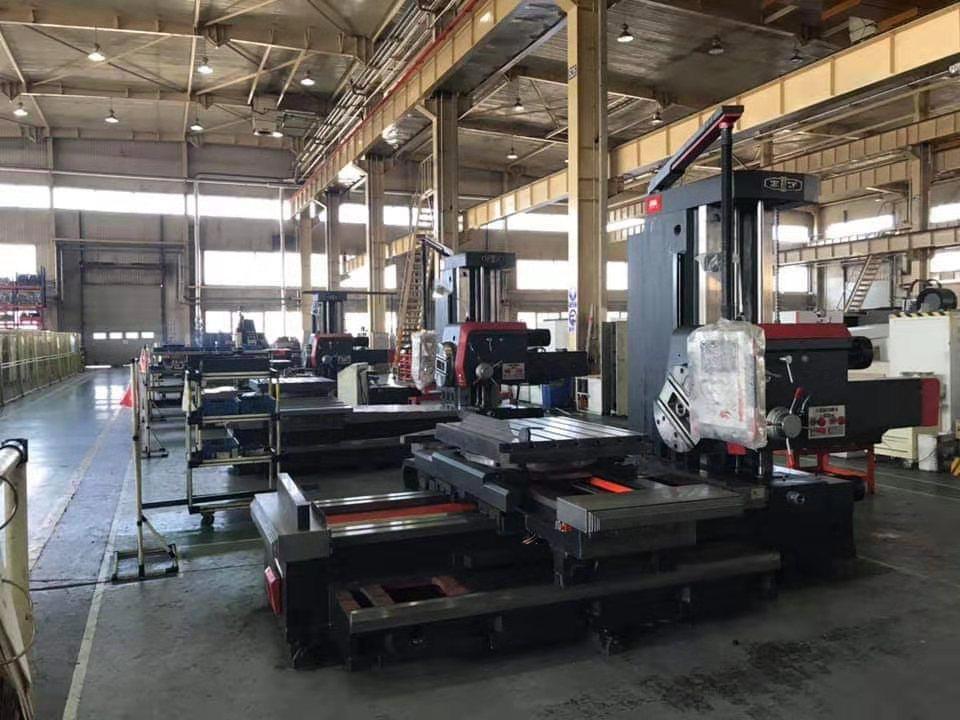
II. Working Principle of Boring and Milling Machines
Boring and milling machines integrate the processes of boring and milling machines:
1. Milling Function: The spindle is equipped with a milling cutter or end mill to perform roughing and finishing operations on workpiece surfaces, steps, and grooves;
2. Boring Function: The spindle is equipped with a boring bar and boring tools. Through radial fine adjustment of the tool, it performs precision reaming and boring on pre-drilled holes, ensuring hole diameter accuracy, concentricity, and hole spacing tolerances. The workpiece is secured to the table, which moves in multiple axes, while the spindle head moves vertically. This allows for face milling, drilling, reaming, and multi-station precision boring to be completed in a single setup, reducing positioning errors caused by multiple setups.
III. Main Categories of Boring and Milling Machines
1. Horizontal Boring and Milling Machines: The most widely used in the industry, these machines feature a horizontally mounted spindle and excel at coaxial multi-hole and face machining of box-type parts. They are the preferred choice for engine blocks and gearbox housings. They are categorized into standard analog horizontal boring machines and CNC floor-type boring and milling machines; large floor-type boring machines can process heavy-duty workpieces weighing several tons.
2. Vertical Boring and Milling Machines: With a vertical spindle, these machines are suited for machining small to medium-sized housings and molds, and are capable of combined drilling, milling, and boring operations. They are commonly used for mass production of small to medium-sized precision components.
3. Gantry Boring and Milling Machines: Featuring a gantry frame structure and a wide worktable, these machines are designed for integrated milling and boring of oversized plates, wind turbine frames, and heavy-duty bases. They are standard equipment in the heavy industry and construction machinery sectors.
IV. Core Advantages of Boring and Milling Machines
1. Strong composite machining capabilities: Milling, drilling, boring, and tapping can be performed in a single setup, shortening process cycles and improving machining efficiency;
2. Outstanding hole machining accuracy: After precision boring, hole diameter tolerances can reach IT6–IT7 grade, ensuring coaxiality, parallelism, and positional accuracy for multiple sets of mounting holes—a capability beyond the reach of conventional drilling machines;
3. Suitable for large-scale machining: With significant advantages in travel and load capacity, these machines handle oversized housings and irregularly shaped heavy-duty workpieces that small and medium-sized machining centers cannot process.
V. Main Application Areas
1. Automotive Powertrain: Diesel/gasoline engine blocks, transmission housings;
2. Heavy Industry & Construction Machinery: Hydraulic valve bodies, gearbox housings, excavator housings;
3. New Energy & Wind Power: Wind turbine gearbox housings, generator bases;
4. Molds & Petrochemicals: Large plastic molds, flange hole systems for pressure vessels.
VI. Industry Development Trends
Legacy mechanical boring machines are gradually being phased out, with CNC boring and milling machines and five-axis boring and milling centers becoming the mainstream; automated tool magazines, in-process inspection, and automated production line integration are becoming widespread. With the expansion of the wind power, construction machinery, and new energy equipment sectors, market demand for large-travel heavy-duty CNC floor-type boring and milling machines continues to rise.
Leave A Message
Scan to Wechat/Whatsapp :